
See your entire topic map before you write a single word.
GazeSEO auto-builds a live topical map of your site: keyword and AI-prompt clusters grouped into pillars, tagged with intent, ranking position, and coverage status. Stop guessing what to write next. See exactly where the gaps are.
Every map includes
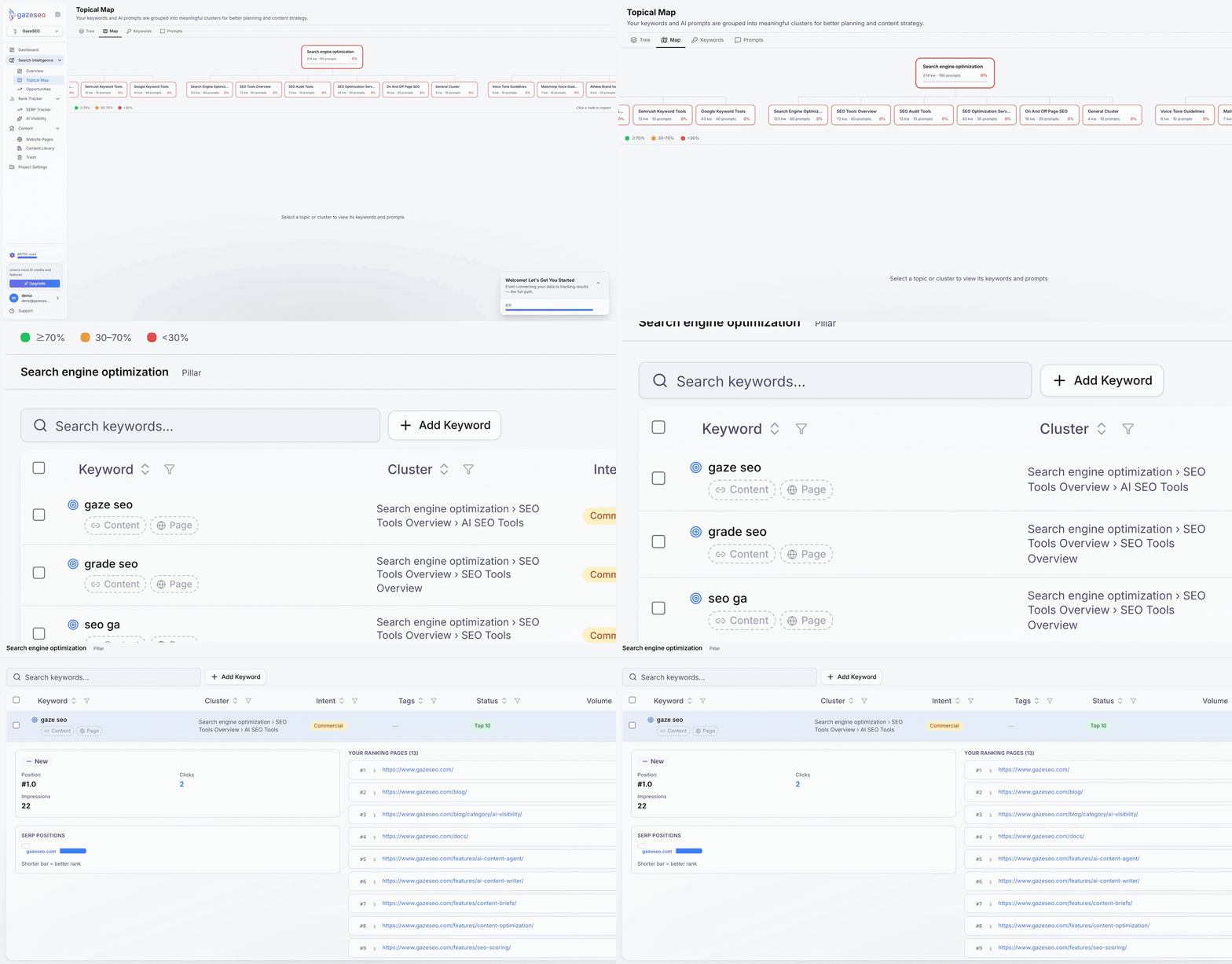
Keyword spreadsheets don’t show you the shape of a topic.
A flat list of keywords tells you volume and difficulty. It doesn’t tell you which topics your site already owns, which are half-covered, and which are wide open for a competitor to take. Teams end up writing whatever’s next on the list instead of what actually closes a gap.
GazeSEO’s Search Intelligence turns your keyword and AI-prompt research into a structured topical map: pillars, sub-clusters, coverage status, and AI-answer visibility, all in one view. You stop picking topics at random and start closing the gaps that move the needle.
Stop writing whatever’s next on the list. Write what closes the gap.
How GazeSEO builds your topical map.
Point GazeSEO at your site and a seed topic. The map builds itself in the background.
- 01Seed a topic
Give GazeSEO your domain and a starting topic, or let it infer one from your site.
- 02Discover and cluster
Keywords and AI-search prompts are discovered, then auto-clustered into pillars and sub-topics.
- 03Tag intent and difficulty
Every cluster is tagged with intent (informational, commercial, navigational, transactional), ranking position, and difficulty.
- 04Match against your content
GazeSEO links clusters to your published pages and marks each as covered, partial, or uncovered.
- 05Score AI visibility
Each topic gets an AEO score: how often it’s mentioned across ChatGPT, Gemini, Perplexity, Claude, and Google AI Overviews.
One map, however you need to read it.
A visual pillar-to-cluster diagram for the big picture, a coverage tree for gap-hunting, and a keyword/prompt table for the detail work.
A pillar-to-cluster diagram with connector lines, color-coded by coverage status. See the shape of your topic authority at a glance.
A hierarchical tree with green, yellow, and red status dots, so gaps are visible without opening a single row.
Every keyword and AI-search prompt in a sortable, filterable table, with volume, difficulty, position, and intent.
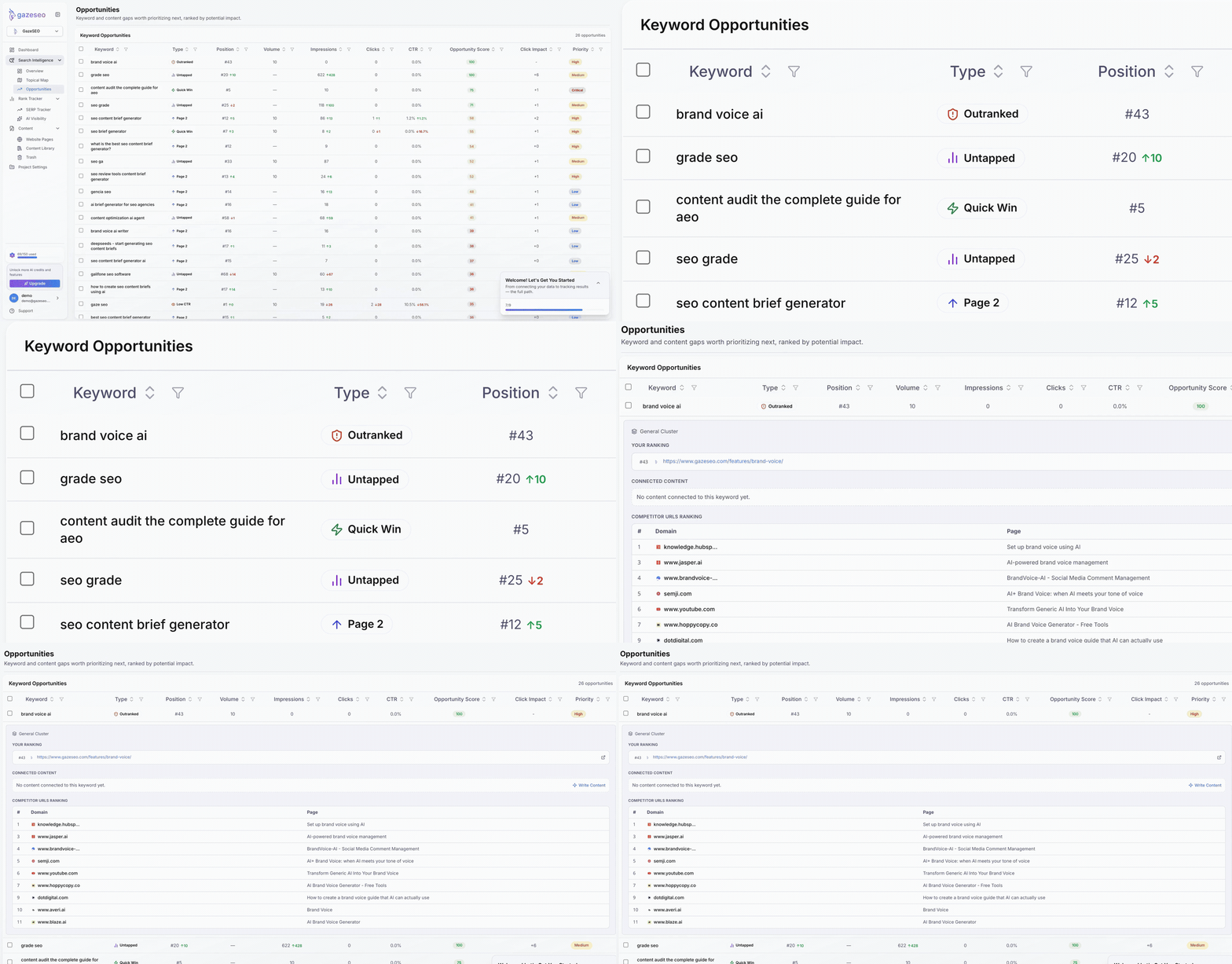
A prioritized list of what to write next.
Not just gaps, ranked ones. GazeSEO surfaces the quick wins first, so your next content decision takes seconds, not a planning meeting.
Who uses Search Intelligence.
Anyone who has ever picked a keyword at random and hoped it was the right one.
Content leads and SEO managers
Turn topic planning from a spreadsheet debate into a five-minute decision. Prioritize by real gaps, not gut feel.
Agencies
Show clients exactly which topics they own and which are open, then justify the content calendar with the map.
Growth and SEO teams
Track AI visibility per topic alongside classic rankings, so GEO and AEO work is prioritized with the same rigor as SEO.
Enterprise content programs
Keep topical authority coherent across dozens of contributors, with one shared map everyone plans against.
Frequently Asked Questions
Common questions about topical mapping, coverage scoring, and AI visibility per topic.
A topical map groups related keywords and AI-search prompts into pillars and sub-clusters, so you can see the shape of a topic instead of a flat keyword list. GazeSEO builds this automatically and links it to your published content.